If you are looking for a simple, safe and completely free way to enjoy movies and series on your cell phone, tablet or TV, Tubi – Free Movies and Series stands out as one of the best options available in 2026. With an impressive collection, a clean interface, and support for Portuguese subtitles, the app offers access to thousands of titles free of charge. And best of all, it's available for direct download from the official stores:

Tubi: Free Movies & Live TV
Best Industrial Robots for Small and Medium-Sized Manufacturers in 2026
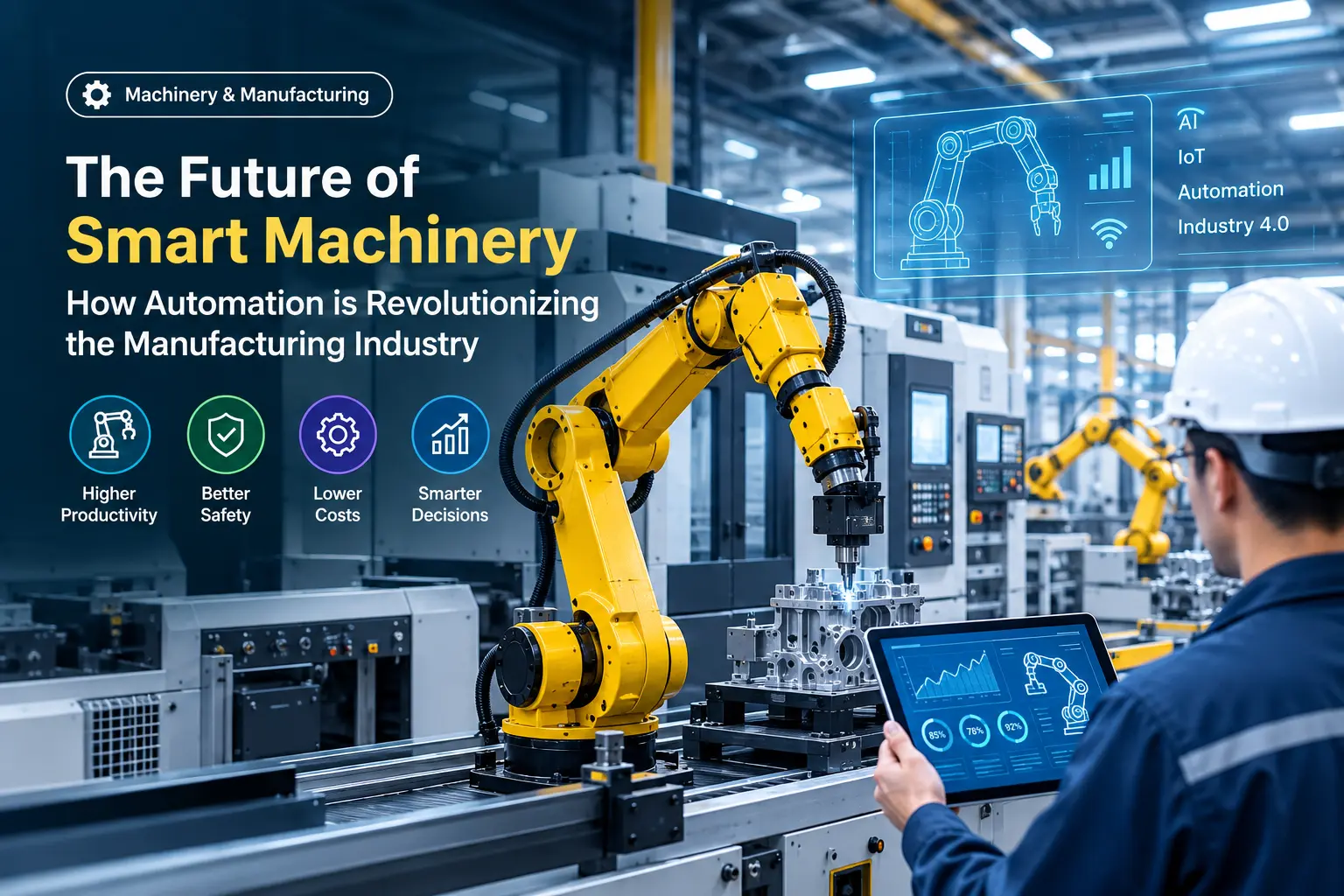
Robotic automation has historically felt out of reach for small and medium sized manufacturers, associated with large capital budgets, dedicated robotics engineers, and production volumes far beyond what a smaller shop typically runs. That picture has changed substantially. Falling hardware costs, dramatically simpler programming interfaces, and flexible financing models have brought genuinely useful robotic automation within reach of manufacturers running much smaller, more varied production than the large automotive and electronics plants that have traditionally dominated robotics adoption.
The challenge for smaller manufacturers is no longer whether robotics can work for their scale, but choosing the right type of robot, application, and financing approach given a tighter budget, limited floor space, and often no dedicated robotics staff on hand to manage a complex deployment. This guide walks through what actually matters when a small or medium sized manufacturer evaluates industrial robots in 2026, the categories of robots best suited to this scale of operation, realistic cost and ROI expectations, and a practical path to a first successful deployment.
Why 2026 Is a Genuinely Good Time for Smaller Manufacturers to Adopt Robotics
Several converging trends have made robotic automation considerably more accessible to smaller operations than it was even a few years ago. Hardware costs for compact collaborative robots have continued to decline as the category has matured and competition among vendors has increased. Programming interfaces have become dramatically simpler, with many current robots supporting hand guided teaching or straightforward visual programming that does not require a dedicated robotics engineer on staff. Persistent labor shortages affecting manufacturers of every size have also made the case for automation more urgent, since many smaller shops report genuine difficulty finding and retaining workers for repetitive or physically demanding tasks that a robot can now handle reliably. Finally, flexible financing models, discussed in more detail later in this guide, have removed much of the large upfront capital barrier that historically excluded smaller manufacturers from robotics investment entirely.
What Actually Matters When Choosing a Robot for a Smaller Operation
Footprint and Floor Space
Smaller manufacturers typically operate in tighter facilities than large enterprise plants, making a robot's physical footprint, including any required safety clearance, a critical practical consideration. Compact collaborative robots designed specifically for smaller footprints, and those that can be mounted on mobile carts to move between tasks as needed, are generally far better suited to space constrained shops than larger traditional industrial robots requiring extensive fixed floor space and safety fencing.
Ease of Programming and Redeployment
Without a dedicated robotics engineer on staff, a smaller manufacturer needs a robot that existing production staff can realistically learn to program and redeploy for new tasks with reasonable training. Robots offering hand guided teaching, where an operator physically moves the robot arm through the desired motion to record it, or simple drag and drop visual programming interfaces, are considerably more practical for this scale of operation than systems requiring specialized programming language expertise.
Minimal Safety Infrastructure Requirements
Given tighter budgets, robots that can operate safely without extensive additional fencing, following an appropriate risk assessment, offer meaningful cost savings for smaller manufacturers compared to traditional industrial robots that require substantial dedicated safety infrastructure regardless of production scale.
Flexibility Across Multiple Tasks
Smaller manufacturers often produce a wider variety of products in smaller batches than large enterprise operations, making a robot's ability to be quickly reconfigured or physically moved between different tasks and workstations considerably more valuable than it would be for a large facility running a single, unchanging high volume process.
Total Cost Relative to Actual Production Volume
Smaller manufacturers should evaluate a robot's cost specifically against their own realistic production volume and labor cost savings, rather than assuming a robot delivers similar ROI regardless of scale, since a robot that pays for itself quickly in a high volume operation may take considerably longer to reach the same payback point in a smaller shop running lower volumes.
Robot Categories Best Suited to Small and Medium Sized Manufacturers
| Robot Category | Best Suited Applications | Why It Fits SMB Constraints |
|---|---|---|
| Compact Collaborative Arms | Machine tending, small parts assembly, packaging | Small footprint, minimal safety infrastructure, easy programming |
| Mobile Cobots on Carts | Flexible tasks across multiple workstations | Can be redeployed quickly as production needs change |
| Compact Palletizing Robots | End of line palletizing for lighter products | Smaller footprint than traditional palletizing systems |
| Cobot Welding Systems | Small batch or varied welding tasks | Lower cost entry point than traditional welding robot cells |
| Autonomous Mobile Robots | Internal material transport between stations | No fixed infrastructure like conveyors required |
Realistic Applications Where Smaller Manufacturers See the Fastest Returns
Machine tending, where a robot loads and unloads parts from a CNC machine, injection molding press, or other production equipment, remains one of the most consistently successful entry points for smaller manufacturers, since it directly addresses a repetitive task that is often difficult to staff and delivers clear, easily measured labor savings. Packaging and simple palletizing tasks are another strong fit, particularly for manufacturers producing lighter products where a compact robot can handle end of line packaging without the extensive infrastructure a traditional high volume palletizing system would require. Small batch or varied welding applications, historically difficult to justify automating due to the high cost and complexity of traditional welding robot cells, have become increasingly accessible through cobot based welding systems designed specifically for shops running shorter production runs with more frequent product changes.
Financing Options That Lower the Barrier to Entry
Smaller manufacturers no longer need to purchase robotics equipment entirely with upfront capital, and several financing approaches have made automation considerably more accessible. Equipment leasing arrangements allow a manufacturer to spread the cost of a robot over a fixed monthly payment rather than a large single purchase, preserving working capital for other business needs. Robotics as a service models take this further, bundling the robot hardware, software, and often ongoing support into a single subscription payment, sometimes structured around actual usage rather than a flat monthly fee, which can align cost more directly with the value the robot is delivering. Government and regional grant programs supporting small manufacturer automation and modernization are also worth investigating, since many regions offer funding specifically targeted at helping smaller manufacturers adopt technology that improves their competitiveness, though the availability and terms of these programs vary considerably by location and should be researched for a manufacturer's specific region.
Setting Realistic Budget and ROI Expectations
Smaller manufacturers should approach robotics investment with a clear, honest understanding of what a realistic budget and payback timeline actually looks like at their specific scale. A single compact collaborative robot for a straightforward machine tending application represents a considerably more modest investment than a full traditional robotic work cell with extensive safety infrastructure, and many smaller manufacturers find this entry level investment reaches payback within a timeframe that makes it a genuinely low risk first step into automation. Manufacturers should build their own ROI estimate based on actual current labor cost for the task being automated, expected reduction in scrap or quality issues, and the specific production volume the robot will actually support, rather than relying on generic industry payback figures that may not reflect their own particular situation and scale.
Common Myths That Hold Smaller Manufacturers Back
A number of persistent myths continue to discourage smaller manufacturers from evaluating robotics seriously, even as the technology has become considerably more accessible. The belief that robotics automation is only economically viable at large enterprise production volumes is increasingly outdated, since compact, lower cost collaborative robots have specifically been designed to deliver reasonable ROI at much smaller scales than traditional industrial robotics ever could. The assumption that a dedicated robotics engineer or specialized programming expertise is required to operate a robot has also become less true, given how many current systems are specifically designed for hand guided teaching and simple visual programming that existing production staff can learn with modest training. Finally, some smaller manufacturers assume automation necessarily eliminates jobs, when in practice many successful smaller scale deployments redirect staff previously performing a repetitive automated task toward more valuable work such as quality oversight, equipment maintenance, or handling the variable, judgment based tasks robots still cannot perform well.
A Practical First Deployment Guide
Smaller manufacturers considering their first robotics investment get the best results by starting with a carefully chosen, well scoped pilot application rather than attempting a large, complex deployment right away. The process should begin by identifying a single, clearly defined task, ideally one that is currently difficult to staff, involves a repetitive motion, and has a relatively consistent part or product to work with, since this combination offers the clearest path to a successful first deployment. From there, manufacturers should request a demonstration or trial using their own actual parts rather than a vendor's generic demonstration hardware, since real world performance on the manufacturer's specific product often differs meaningfully from a polished sales demonstration. Involving the production staff who will actually work alongside the robot early in the evaluation process, rather than presenting automation as a decision made entirely by management without their input, also tends to significantly improve how smoothly the deployment is adopted once the robot is actually installed and running.
Industry Examples of Smaller Manufacturers Adopting Robotics Successfully
A small metal fabrication shop running a variety of custom orders in modest batch sizes offers a representative example of how this technology fits smaller operations. Rather than automating an entire production line, such a shop might deploy a single compact cobot dedicated to tending a CNC machine during off hours or overnight, allowing the machine to keep running unattended on well characterized jobs while staff focus their daytime hours on the more variable setup and quality work that still requires human judgment. A small contract packaging operation serving several different consumer brands might deploy a mobile cobot that can be wheeled between different packaging lines as customer orders shift, avoiding the need to purchase separate dedicated automation for each individual product line it packages. A small precision machine shop producing a wide variety of low volume parts might use a compact palletizing robot only during its highest volume production runs, redeploying the same unit for a different task during the many periods when order volume for any single product does not justify dedicated automation on its own. These examples share a common thread: rather than trying to replicate the large scale, single purpose automation model common in enterprise manufacturing, smaller manufacturers get the best results by choosing flexible, redeployable robotics that fit naturally around their more varied and lower volume production reality.
Evaluating Vendors and Integrators for a Smaller Deployment
Smaller manufacturers without significant prior robotics experience should pay particular attention to the quality and responsiveness of vendor and integrator support, since this often matters more for a successful first deployment than the specific technical specifications of the robot itself. Asking a prospective vendor how they support customers of a similar size and technical sophistication, rather than only their largest enterprise accounts, helps reveal whether that vendor is genuinely equipped to support a smaller manufacturer through the inevitable questions and adjustments that come with a first automation project. Local or regional integrators familiar with smaller manufacturing operations in a similar industry can also be a valuable resource, often providing more hands on, accessible support during initial setup and troubleshooting than a larger vendor primarily focused on large enterprise accounts. Manufacturers should also ask directly about the ongoing support and spare parts availability for whatever specific robot model they are considering, since a lower upfront cost is far less valuable if it comes with slow or difficult access to support once the robot is actually running in production.
Common Mistakes Smaller Manufacturers Make With Their First Robot
A few recurring mistakes tend to undermine a smaller manufacturer's first robotics investment. Choosing too ambitious or complex a first application, rather than starting with a well defined, contained task, often leads to a frustrating and drawn out initial deployment that damages internal confidence in automation more broadly. Underestimating the importance of consistent part presentation and fixturing, assuming a robot can simply handle whatever variation currently exists in how parts arrive at a workstation, frequently causes reliability problems that have more to do with inadequate part handling setup than any actual limitation of the robot itself. Finally, failing to plan for basic ongoing maintenance and support, assuming a robot will simply run indefinitely without any attention once installed, can lead to avoidable downtime that undermines the return on investment the automation was meant to deliver in the first place.
Frequently Asked Questions
How much floor space does a typical cobot deployment actually require?
Compact collaborative robots are specifically designed for tight spaces and can often be installed in a footprint comparable to a single worker's station, though the exact space required depends on the specific task, tooling, and any part feeding or fixturing equipment needed alongside the robot itself.
Can existing production staff really learn to program a robot without specialized training?
Many current collaborative robots are specifically designed for hand guided teaching and simple visual programming interfaces that production staff can learn with modest training, though more complex applications involving advanced sensor integration or multiple coordinated robots may still benefit from some outside integration support.
Is leasing or buying a robot outright better for a small manufacturer?
This depends on the manufacturer's cash flow priorities and how confident they are in the specific application's long term value, since leasing preserves working capital and reduces upfront risk while outright purchase can be more cost effective over a longer multi year period if the application proves successful and stable.
What is a realistic first robotics application for a manufacturer with no automation experience?
Machine tending, where a robot loads and unloads parts from an existing piece of production equipment, is generally considered one of the most accessible and successful first applications, since it involves a well defined, repetitive task with a clear, easily measured labor savings benefit.
Do smaller manufacturers need to hire new staff to maintain a robot?
Not necessarily for a straightforward cobot deployment, since many current systems are designed for simplified maintenance that existing maintenance staff can handle with modest additional training, though more complex applications or higher robot utilization may eventually justify dedicated internal expertise as automation use expands.
How many different tasks can a single cobot realistically handle in a small shop?
A well chosen mobile or easily reconfigurable cobot can often support several different tasks across a week or even within a single shift, particularly when paired with simple, quick change tooling and fixturing, though the specific number of tasks a single unit can realistically support depends on how much time is needed to safely and reliably reconfigure it between each different job.
What ongoing costs should a small manufacturer expect beyond the initial robot purchase or lease?
Beyond the robot itself, manufacturers should budget for occasional replacement of end effector components such as grippers that experience wear, any task specific fixturing or tooling needed for new applications, and a modest amount of ongoing software updates or support fees depending on the specific vendor's pricing model.
Final Thoughts
Robotic automation is no longer a technology reserved for large enterprise manufacturers with dedicated engineering teams and large capital budgets. Compact, flexible collaborative robots, combined with accessible financing models and dramatically simplified programming, have brought genuinely useful automation within reach of small and medium sized manufacturers in 2026. The manufacturers who succeed with their first robotics investment are consistently the ones who choose a well defined, realistic starting application, involve their production staff in the process, and set honest expectations about cost and payback based on their own actual scale, rather than assuming robotics only makes sense at the volumes traditionally associated with large industrial automation.