If you are looking for a simple, safe and completely free way to enjoy movies and series on your cell phone, tablet or TV, Tubi – Free Movies and Series stands out as one of the best options available in 2026. With an impressive collection, a clean interface, and support for Portuguese subtitles, the app offers access to thousands of titles free of charge. And best of all, it's available for direct download from the official stores:

Tubi: Free Movies & Live TV
AI CNC Machines: How Artificial Intelligence Is Changing CNC Manufacturing in 2026
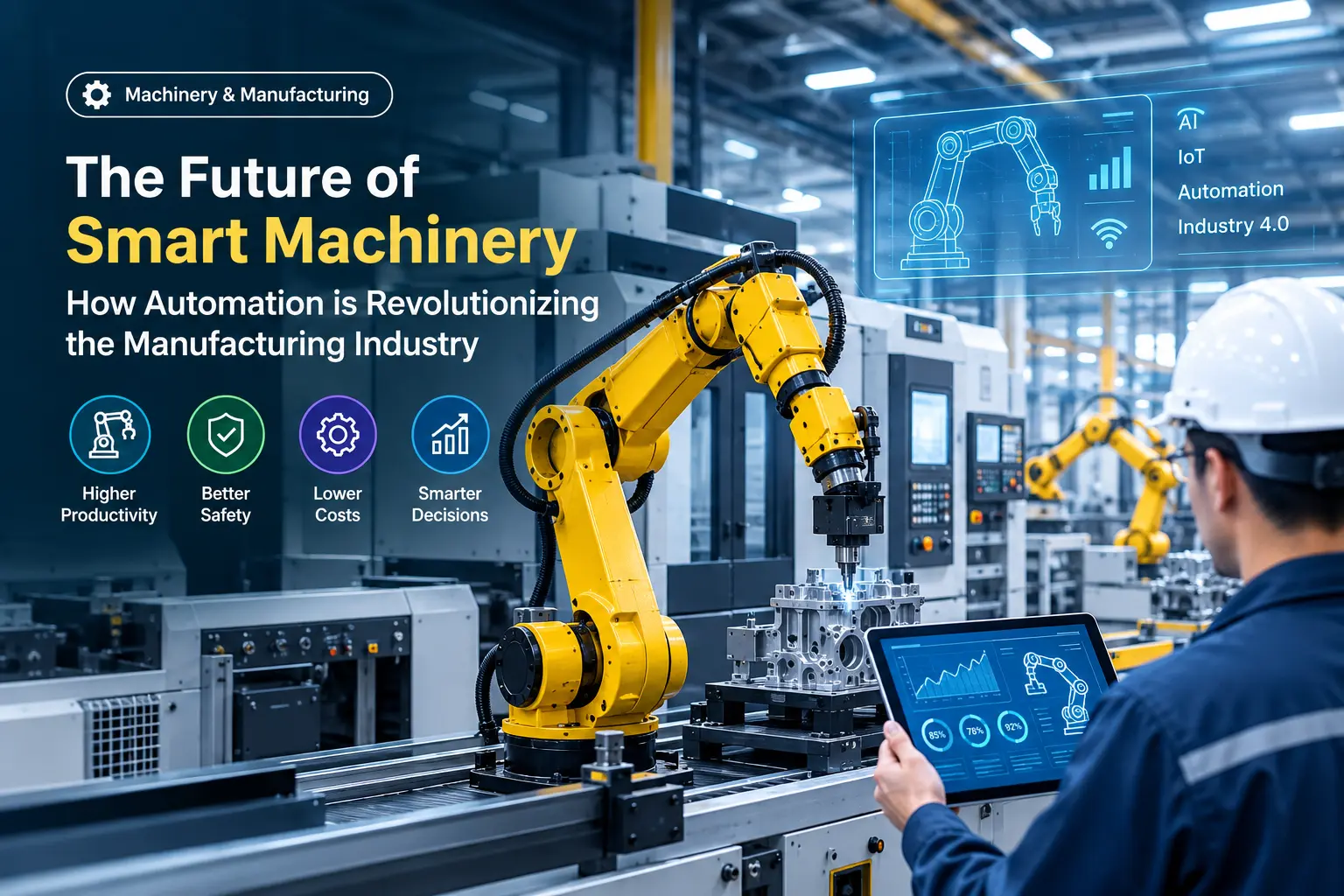
CNC machining has always depended on a program written in advance, running a fixed sequence of tool movements at fixed speeds regardless of how the actual cutting process is behaving in real time. That model has served manufacturing well for decades, but it leaves real efficiency on the table, since a program written with conservative, one size fits all parameters cannot account for the natural variation in material hardness, tool wear, and thermal conditions that occur during actual production. AI is changing this by giving CNC machines the ability to sense what is actually happening during a cut and adjust accordingly, rather than blindly executing a static program written without that real time feedback.
This shift touches nearly every stage of the CNC machining process, from how programs are initially generated to how the machine behaves during actual cutting to how quality is verified once a part is complete. This guide walks through the specific ways artificial intelligence is being applied to CNC manufacturing in 2026, the concrete benefits this delivers, and practical guidance on implementation and realistic ROI for manufacturers considering this technology.
Traditional CNC vs AI-Enhanced CNC
A traditional CNC machine executes a pre written program with fixed feed rates, spindle speeds, and toolpaths, determined in advance based on generally conservative assumptions about material properties and tool condition, since the program has no way to know how conditions will actually vary during a specific production run. An AI enhanced CNC machine, by contrast, incorporates sensors monitoring cutting forces, vibration, temperature, and acoustic emissions, feeding this real time data into models that can adjust feed rate, spindle speed, or even the toolpath itself dynamically during the cutting process, responding to actual conditions rather than following a fixed, one size fits all program regardless of what is actually happening at the cutting tool.
Key AI Capabilities Transforming CNC Machining
Adaptive Feed and Speed Control
Rather than running at a single conservative feed rate calculated to handle worst case material hardness across an entire production run, AI enhanced CNC machines can monitor real time cutting forces and adjust feed rate dynamically, running faster through easier sections of a cut and automatically slowing down when the material proves harder than expected, improving overall cycle time without sacrificing tool life or part quality.
Tool Wear Prediction
By continuously analyzing cutting force signatures, vibration patterns, and acoustic emissions during machining, AI models can detect the subtle signs of developing tool wear well before a tool fails outright or produces an out of tolerance part, allowing tool changes to be scheduled proactively rather than relying on a fixed tool change interval that may replace tools too early or risk running them dangerously close to failure.
In-Process Quality Monitoring
Sensors integrated directly into the machining process can detect deviations from expected cutting behavior that indicate a developing quality problem, such as chatter, tool deflection, or an incorrect material batch, allowing the system to flag or even halt production before an entire batch of parts is machined outside of tolerance, rather than only discovering the problem during a separate post process inspection step after significant scrap has already been produced.
AI-Assisted CAM Programming
Generating an efficient CNC program has traditionally required a skilled programmer manually selecting toolpaths, feeds, and speeds based on experience and reference tables, a process that AI assisted computer aided manufacturing software is increasingly able to accelerate significantly, automatically suggesting or generating efficient toolpaths based on a part's geometry and material, then allowing a human programmer to review and refine the AI generated starting point rather than building the entire program from scratch.
Generative Design Integration
AI generative design tools can propose part geometries specifically optimized for CNC machinability, weight reduction, or material efficiency, and increasingly integrate directly with CAM software to generate not just an optimized part design but a machining strategy suited to actually producing that design efficiently on available equipment.
Autonomous and Unattended Operation
The combination of adaptive control, tool wear prediction, and in process quality monitoring is enabling increasingly confident unattended or lights out CNC operation, allowing well characterized, high confidence jobs to run overnight or across unstaffed shifts without a human operator present to catch problems, since the AI systems themselves are increasingly capable of detecting and appropriately responding to developing issues that would previously have required human intervention.
Traditional CNC vs AI-Enhanced CNC at a Glance
| Aspect | Traditional CNC | AI-Enhanced CNC |
|---|---|---|
| Feed and Speed Settings | Fixed, based on conservative assumptions | Dynamically adjusted based on real time conditions |
| Tool Change Timing | Fixed interval or after failure | Predicted based on actual wear signatures |
| Quality Verification | Typically a separate post process inspection step | Often integrated into the machining process itself |
| Program Generation | Fully manual, based on programmer experience | AI assisted, with human review and refinement |
| Unattended Operation Confidence | Limited, generally requires operator presence | Higher, supports well characterized lights out runs |
Concrete Benefits Manufacturers Are Seeing
Manufacturers adopting AI enhanced CNC capability report improvements across several distinct areas rather than a single isolated benefit. Reduced cycle times come from adaptive feed control running faster through easier material sections rather than the entire program being constrained by worst case assumptions. Extended tool life results from more precisely timed tool changes based on actual wear condition rather than a fixed interval that may replace tools earlier than necessary. Reduced scrap and rework comes from catching developing quality problems during the machining process itself rather than discovering an entire batch of out of tolerance parts during post process inspection. Faster program development results from AI assisted CAM tools accelerating the traditionally time consuming manual programming process, freeing skilled programmers to focus their expertise on refinement and unusual cases rather than building every program entirely from scratch.
Retrofit vs New AI-Native CNC Machines
Manufacturers do not necessarily need to replace their existing CNC machines to gain meaningful AI capability, since many of the sensors and software needed for adaptive control, tool wear prediction, and in process monitoring can be retrofitted onto existing, mechanically sound machines. This retrofit approach is often considerably more cost effective for manufacturers with a fleet of reliable existing machines that simply lack the sensing and adaptive control layer needed for these more advanced capabilities. Newer machines designed with AI native control systems typically integrate these capabilities more seamlessly and may offer better performance out of the box, but at a higher cost than a retrofit approach, making the right choice dependent on the age, condition, and control system compatibility of a manufacturer's existing machine fleet.
ROI Considerations for AI CNC Investment
The strongest ROI case for AI enhanced CNC capability typically comes from a combination of factors specific to a manufacturer's current operation, and building a credible estimate requires looking at the manufacturer's own actual numbers rather than generic industry claims. Manufacturers running high value materials or complex parts where scrap carries a particularly high cost tend to see strong returns from in process quality monitoring, since even a modest reduction in scrap rate can represent significant savings when the material and machining time invested in each part is substantial. Facilities running machines for extended unattended periods, such as overnight or weekend shifts, tend to see strong returns from the tool wear prediction and autonomous operation capabilities that make unattended running more reliable and confident. Shops with a high mix of varied parts and correspondingly high programming overhead per job tend to see strong returns from AI assisted CAM programming, since the time savings compound across a large number of relatively short production runs each requiring their own program.
Sensor Technology Behind AI-Enhanced CNC Capability
Several categories of sensors work together to give an AI enhanced CNC machine the real time awareness needed to adapt its behavior during cutting. Force and torque sensors integrated into the spindle or tool holder measure the actual cutting forces being generated in real time, providing the core data needed for both adaptive feed control and tool wear detection, since a gradually increasing force required to maintain the same material removal rate is one of the clearest signals of developing tool wear. Vibration sensors mounted on the spindle housing or tool holder detect the onset of chatter, a self excited vibration that degrades surface finish and can accelerate tool wear, allowing the system to adjust cutting parameters before chatter becomes severe enough to damage the part or tool. Acoustic emission sensors, which detect the high frequency sound waves generated by the cutting process itself, can identify subtle changes in the cutting mechanism, such as the transition from smooth chip formation to the kind of tearing associated with a dulling tool, often providing an earlier warning signal than force or vibration data alone. Temperature sensors monitoring the cutting zone and spindle bearings round out this sensor suite, helping detect thermal issues that can affect both part accuracy through thermal expansion and machine reliability through excessive heat buildup in critical components.
How AI CNC Capability Connects to Broader Manufacturing Systems
The value of AI enhanced CNC machining multiplies considerably when the data it generates connects into a manufacturer's broader manufacturing execution and quality systems rather than remaining isolated within the individual machine's own control system. Feeding tool wear predictions into a manufacturing execution system allows maintenance and tooling teams to proactively stage replacement tools and schedule changes during planned downtime windows rather than reacting to an unplanned stoppage mid shift. Connecting in process quality data to a facility wide quality management system allows manufacturers to correlate machining anomalies with specific material lots, tool batches, or environmental conditions that might otherwise be difficult to trace using only final part inspection data collected well after the actual machining event occurred. Manufacturers building out this kind of connected infrastructure around their AI enhanced CNC machines are effectively extending the same unified data architecture principles that apply to broader connected factory initiatives, treating each machine's rich internal sensor data as a valuable input to the facility's overall data ecosystem rather than a siloed capability limited to that single machine.
Current Challenges and Limitations
Despite genuine progress, manufacturers should approach AI CNC capability with realistic expectations about its current limitations. Older CNC controllers may have limited ability to accept real time adjustment commands from an external AI system, sometimes requiring a controller upgrade or replacement alongside any sensor retrofit to fully realize adaptive control capability. The accuracy of tool wear prediction and quality monitoring models depends heavily on having sufficient historical data specific to the exact material, tool, and part combination being monitored, meaning genuinely novel jobs with no prior production history may see less accurate predictions until the system accumulates enough operating data on that specific combination. Manufacturers should also recognize that AI assisted CAM programming, while a significant accelerator, still generally benefits from experienced human review, since an AI generated toolpath may not account for shop specific practices, fixture constraints, or other contextual factors that an experienced programmer would naturally incorporate.
Industry Examples of AI CNC Adoption
Aerospace machine shops working with expensive titanium and other difficult to machine materials have been particularly aggressive adopters of tool wear prediction and adaptive feed control, given the combination of high material cost, expensive cutting tools, and long machining cycle times that make both scrap and tool failure especially costly in this industry. Automotive parts suppliers running high volume production of engine and transmission components have adopted in process quality monitoring extensively, since even a small defect rate across a very high production volume represents a meaningful absolute cost, and catching problems during machining rather than at final inspection significantly reduces the accumulated cost of producing an entire batch of defective parts before the issue is caught. Job shops and contract manufacturers producing a high mix of varied, lower volume parts have found AI assisted CAM programming particularly valuable, since the traditional manual programming overhead for each new job represents a proportionally larger share of total production time compared to a high volume, single product manufacturer running the same program repeatedly for months or years.
Frequently Asked Questions
Can an older CNC machine be retrofitted with AI capability, or does it require a new machine?
Many older CNC machines can be retrofitted with sensors and software for capabilities such as tool wear prediction and in process quality monitoring, though achieving full real time adaptive feed and speed control may require a controller capable of accepting dynamic adjustment commands, which can sometimes necessitate a controller upgrade alongside the sensor retrofit.
How accurate is AI tool wear prediction compared to a fixed tool change schedule?
AI based tool wear prediction generally achieves considerably better accuracy than a fixed schedule once sufficient historical data has been collected for the specific material and tool combination being monitored, though prediction accuracy on genuinely novel jobs with no prior production history will initially be less refined until the system accumulates enough operating data on that specific combination.
Does AI assisted CAM programming eliminate the need for a skilled CNC programmer?
No, AI assisted programming tools accelerate the initial toolpath generation process but still generally benefit from review and refinement by an experienced programmer who can incorporate shop specific practices, fixture constraints, and other contextual knowledge the AI system may not fully account for.
Which manufacturers see the strongest ROI from AI enhanced CNC capability?
Manufacturers working with expensive materials where scrap is particularly costly, those running machines for extended unattended periods, and shops producing a high mix of varied parts with significant programming overhead per job all tend to see particularly strong returns from different specific AI CNC capabilities matched to their operational priorities.
Is autonomous, lights out CNC operation reliable enough for unsupervised overnight production?
Well characterized, high confidence jobs with a strong operating history and robust in process monitoring have demonstrated reliable unattended operation for many manufacturers, though shops should build confidence gradually, starting with well understood parts before extending unattended operation to more novel or complex jobs with less established operating history.
What is the typical payback period for adding AI capability to an existing CNC machine?
Payback periods vary considerably depending on which specific capabilities are added and how well they align with a shop's particular cost drivers, with shops facing high scrap costs on expensive materials or significant unplanned tool related downtime typically seeing faster payback than shops whose existing manual processes are already relatively efficient for their specific production mix.
Do all CNC machine manufacturers offer AI enhanced capability, or is this limited to certain brands?
AI enhanced capability is increasingly available across many CNC machine manufacturers either as a built in feature on newer machines or through third party retrofit sensor and software packages compatible with a range of existing controllers, though the specific depth of integration and available capabilities can vary considerably between different manufacturers and retrofit solutions.
Final Thoughts
Artificial intelligence is changing CNC machining from a fixed, pre programmed process into one capable of sensing and adapting to actual real time conditions, delivering meaningful improvements in cycle time, tool life, scrap reduction, and programming efficiency along the way. Manufacturers evaluating this technology should focus on the specific capabilities most aligned with their own operational priorities, whether that is adaptive control for expensive material machining, tool wear prediction for extended unattended operation, or AI assisted programming for high mix, varied production, rather than assuming every AI CNC capability delivers equal value across every type of manufacturing operation.