If you are looking for a simple, safe and completely free way to enjoy movies and series on your cell phone, tablet or TV, Tubi – Free Movies and Series stands out as one of the best options available in 2026. With an impressive collection, a clean interface, and support for Portuguese subtitles, the app offers access to thousands of titles free of charge. And best of all, it's available for direct download from the official stores:

Tubi: Free Movies & Live TV
Industrial Robot Maintenance: How Predictive AI Can Prevent Robot Downtime
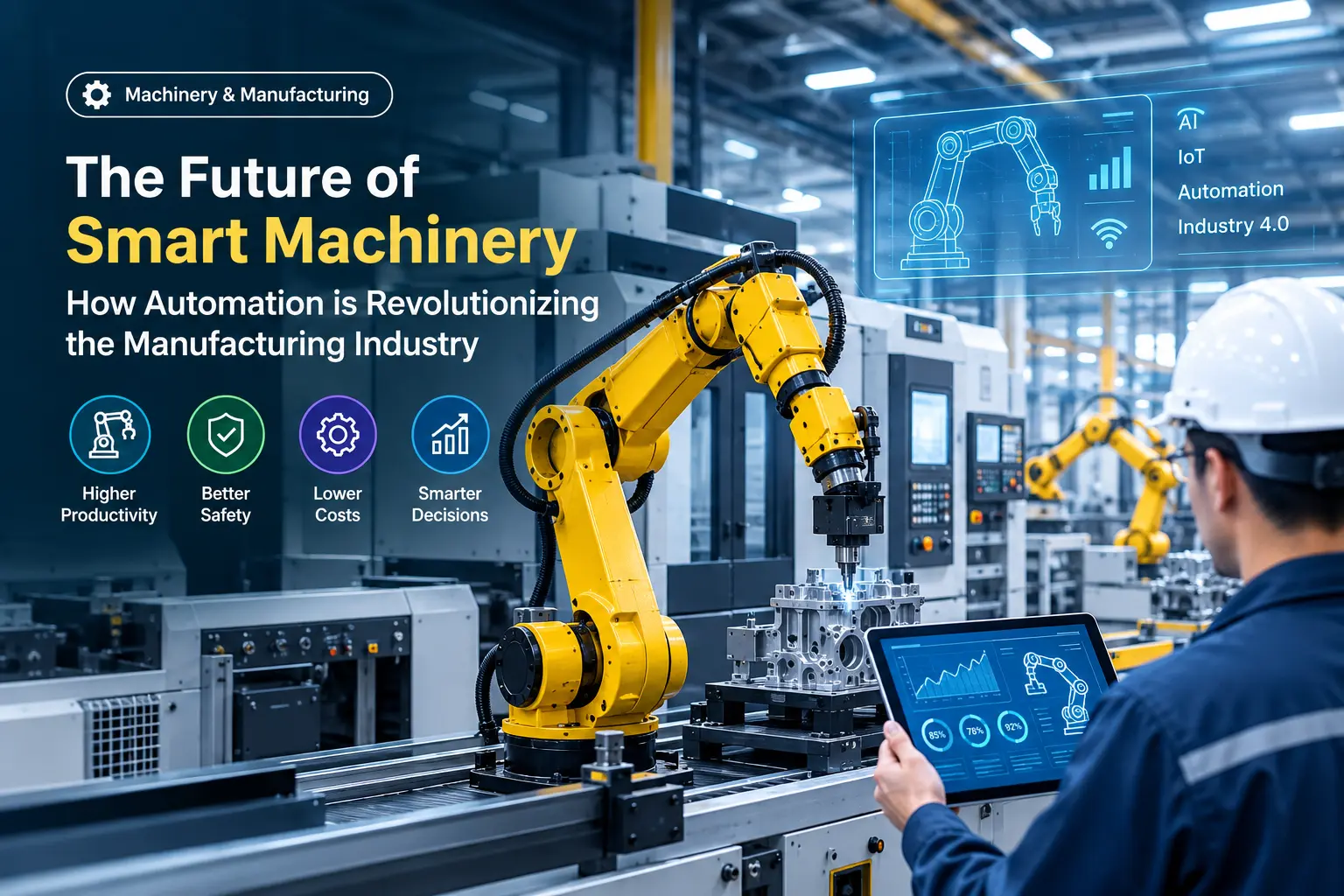
A robot going down unexpectedly rarely stays an isolated problem. Because robots typically sit at the center of a coordinated production cell, a single failed axis or seized gearbox can halt every upstream and downstream process that depends on that robot's output, turning what might look like a single machine failure into a full line stoppage affecting dozens of workers and an entire day's production schedule. This cascading effect is exactly why predictive maintenance has become such a high priority specifically for industrial robots, even in facilities that have not yet extended the same approach to other equipment.
Robots also present a somewhat different maintenance challenge than typical rotating equipment like pumps or motors, since a robot combines several different moving components, each with its own distinct wear patterns and failure modes, all coordinated by a controller that already collects an enormous amount of internal performance data. This guide explains why robot downtime carries such outsized cost, the specific failure modes predictive maintenance for robots needs to address, how AI actually monitors robot health using data many robots are already generating, and a practical framework for deploying this capability across a fleet of robots.
Why Robot Downtime Is Uniquely Costly
Unlike a standalone piece of equipment that might have some buffer inventory or an alternate path around it, robots are frequently positioned as a single point of failure within a tightly coordinated production cell or line. A robot performing a core task such as welding, material transfer, or assembly often cannot be easily bypassed, meaning its failure immediately halts every subsequent step in the process rather than allowing the rest of the line to continue operating around the problem. Robots also tend to occupy roles where manual backup is impractical, either because the task requires precision or speed beyond what a human operator could match, or because the robot has been integrated into a fully enclosed or otherwise inaccessible work cell that cannot easily accommodate a manual workaround during a repair. This combination of central positioning and limited backup options is exactly why even a single robot failure can generate downtime costs far exceeding what the specific component failure itself would suggest.
Common Failure Modes in Industrial Robots
Servo Motor Degradation
The servo motors driving each robot axis experience gradual wear over millions of operating cycles, often showing early warning signs through subtle changes in current draw, torque output, or operating temperature well before an outright failure occurs.
Gearbox and Harmonic Drive Wear
The precision gearboxes, often harmonic drives, that translate motor rotation into precise joint movement are among the most expensive components to replace and typically show gradually increasing backlash or vibration as internal wear accumulates, making them a particularly valuable target for predictive monitoring given their high replacement cost.
Encoder and Position Feedback Issues
Encoders providing precise position feedback for each joint can develop signal noise or drift over time, sometimes resulting in subtle accuracy degradation that affects product quality before it becomes severe enough to trigger an outright fault or stoppage.
Cable and Harness Wear
The cables and wiring harnesses running through a robot's moving joints experience continuous flexing throughout millions of operating cycles, making them prone to gradual insulation wear and eventual intermittent connection failures that can be notoriously difficult to diagnose through simple visual inspection alone.
End Effector and Gripper Wear
The tooling attached to a robot's end, including grippers, welding torches, and other task specific tools, experiences its own distinct wear patterns depending on the specific application, often requiring separate monitoring from the core robot arm itself.
Calibration Drift
Over time and after any physical impact or collision, a robot's precise spatial calibration can gradually drift, resulting in accuracy degradation that may not trigger an outright fault but can meaningfully affect product quality, particularly in precision assembly or inspection tasks.
How Predictive AI Actually Monitors Robot Health
Much of the data needed for robot predictive maintenance already exists inside a modern robot's own controller, since robots continuously track detailed information about motor current, torque output, position accuracy, and cycle timing as part of their normal operation. Predictive AI systems for robots typically tap into this existing controller data stream, applying machine learning models trained to recognize the subtle patterns that precede specific failure modes, such as a gradual increase in torque required to complete a specific motion segment, indicating developing gearbox wear, or a slow drift in cycle time for a repeated task, which can indicate accumulating mechanical resistance somewhere in the robot's drivetrain. Some more advanced monitoring approaches supplement this internal controller data with additional external sensors, such as vibration sensors mounted directly on joints or thermal cameras monitoring motor housings, providing an additional layer of insight beyond what the robot's own internal sensors capture. This combination of rich existing internal data and the option for supplementary external sensing is what makes robots a particularly well suited target for predictive maintenance compared to many other categories of industrial equipment that may require considerably more retrofit sensor investment to achieve similar visibility.
Comparing Maintenance Approaches for Industrial Robots
| Approach | How It Works | Key Limitation |
|---|---|---|
| Reactive Maintenance | Repair only after a robot fails or faults | Unplanned downtime, often affects the entire cell |
| Scheduled Preventive Maintenance | Service on a fixed calendar or cycle count schedule | May replace healthy parts early or miss developing issues |
| Predictive Maintenance | AI models detect early signs of developing wear | Requires reliable data and model training over time |
OEM Monitoring Platforms vs Third Party Solutions
Manufacturers evaluating robot predictive maintenance generally choose between monitoring platforms offered directly by the robot's original manufacturer or third party solutions designed to work across robots from multiple different manufacturers. OEM platforms typically offer the deepest, most seamless access to a robot's internal controller data, since they are built by the same company that designed the robot's control system, but they generally only support that specific manufacturer's robots, which can be limiting for facilities operating a mixed fleet from several different robot manufacturers. Third party platforms designed to support multiple robot brands offer valuable flexibility for facilities with a mixed fleet, allowing a single monitoring system to cover the entire robot population regardless of manufacturer, though they may have somewhat less deep access to certain manufacturer specific internal data points compared to a dedicated OEM solution. Manufacturers with a single robot brand across their facility often find the OEM platform the simpler and more capable choice, while those with a genuinely mixed fleet should weigh the convenience of unified third party monitoring against any potential reduction in monitoring depth for each specific robot brand involved.
A Practical Implementation Framework for a Robot Fleet
Manufacturers introducing predictive maintenance across a fleet of robots get the best results by prioritizing based on criticality rather than attempting to instrument every robot simultaneously. The process should begin by identifying which robots occupy the most critical, hardest to bypass positions within production cells, since these are the assets where unplanned downtime carries the highest cost and where predictive maintenance delivers the most immediate value. From there, manufacturers should confirm what internal controller data is already accessible from these priority robots and whether any additional external sensors are needed to fill specific monitoring gaps, before selecting and configuring the appropriate monitoring platform for that data. A baseline period allowing the system to learn what normal operating behavior looks like for each specific robot under its actual production conditions should follow, since even robots of the same model can show slightly different baseline signatures depending on their specific application and mechanical history. Once the system demonstrates reliable predictive accuracy on this initial priority group, the same approach can be extended to additional robots across the fleet, ideally using lessons learned from the initial rollout to streamline the process for each subsequent addition.
Calculating ROI for Robot-Specific Predictive Maintenance
Building an ROI case for robot predictive maintenance should account for the full, often cascading cost of an unplanned robot failure rather than just the direct repair cost of the failed component. Manufacturers should estimate not only the cost of the specific part replacement and labor involved in an unplanned robot repair, but the value of lost production across the entire cell or line the robot supports for the duration of that unplanned downtime, since this cascading impact is frequently many times larger than the direct repair cost alone. High value gearbox and servo motor components, given their significant replacement cost and the extended lead times sometimes involved in sourcing a specific replacement part, represent a particularly strong case for predictive monitoring, since early detection allows a manufacturer to schedule a replacement during planned downtime and order the specific part well in advance, rather than facing an emergency situation with an idle production line waiting on a part that may take considerable time to source.
Industry Examples of Robot Predictive Maintenance in Practice
Automotive body shops running dozens of welding robots in tightly synchronized lines offer a clear example of why this technology matters so much specifically for robots. A single welding robot failure on a body line can halt the entire line within minutes, since the welds performed by that specific robot are typically required before the vehicle body can proceed to the next station, making even a short unplanned repair window extremely costly across the full line's production rate. Many automotive manufacturers have consequently become early and aggressive adopters of robot specific predictive maintenance, particularly for the gearboxes and servo motors on their highest utilization welding robots. Electronics assembly operations running smaller, more precise robots for component placement face a somewhat different but equally important challenge, since gradual calibration drift on these robots can degrade placement accuracy well before triggering an outright fault, making predictive monitoring for accuracy degradation just as valuable as monitoring for outright mechanical failure in this particular application. Food and beverage manufacturers using robots for packaging and palletizing, often running continuously across multiple shifts with limited scheduled downtime windows, have found predictive maintenance particularly valuable for planning necessary repairs during the brief maintenance windows that do exist in their production schedule, rather than risking an unplanned failure that could halt packaging during a continuous production run.
Building Internal Expertise Alongside the Technology
Deploying predictive maintenance technology for a robot fleet delivers its full value only when paired with maintenance staff who understand how to interpret and act on the resulting insights, rather than treating the system as a fully automated replacement for human judgment. Manufacturers should invest in training maintenance technicians not just on how to read a predictive dashboard, but on the underlying mechanical reasoning behind why specific data patterns indicate particular developing failure modes, since this deeper understanding helps staff trust and act on the system's recommendations more confidently, and also helps them recognize when a specific alert may warrant a different response than the system's default recommendation based on additional context only a human technician would have. Building this internal expertise gradually, starting with the initial pilot group of critical robots before expanding fleet wide, also helps an organization develop internal champions who can help train and reassure other staff as the predictive maintenance program scales to cover a larger portion of the robot fleet.
Common Mistakes When Implementing Robot Predictive Maintenance
A number of avoidable mistakes tend to undermine robot predictive maintenance initiatives. Attempting to instrument an entire robot fleet simultaneously rather than starting with a focused pilot on the most critical robots often results in a diluted initial effort that fails to demonstrate clear value quickly enough to sustain organizational support for the broader rollout. Relying purely on generic fault codes and existing controller alarms, rather than investing in a genuine predictive model trained to recognize gradual, developing wear patterns, tends to deliver much of the same reactive experience the initiative was meant to improve upon, since standard fault codes typically only trigger once a problem has already become severe enough to affect robot operation. Failing to establish a clear internal process for actually acting on predictive alerts, routing them into a maintenance team's existing work order system rather than leaving them as a separate dashboard nobody consistently monitors, frequently results in a technically accurate predictive system that fails to translate its insights into the planned maintenance actions needed to actually prevent the downtime it identified.
Frequently Asked Questions
Do modern industrial robots already collect enough data for predictive maintenance without additional sensors?
Many modern robot controllers already track detailed internal data on motor current, torque, and position accuracy that can support meaningful predictive maintenance without additional hardware, though some applications benefit from supplementary external sensors such as vibration monitors for even earlier or more precise failure detection.
Which robot component failure is most valuable to predict in advance?
Gearbox and harmonic drive failures are often considered the highest value target for predictive monitoring, given their significant replacement cost and the potential for extended parts sourcing delays if a failure occurs unexpectedly rather than being anticipated and planned for in advance.
Should a facility with robots from multiple manufacturers use one unified monitoring platform or separate OEM tools?
This depends on how much a facility values having a single unified view across its entire robot fleet versus the potentially deeper, more manufacturer specific insight an individual OEM platform can offer for that specific brand, with many mixed fleet facilities favoring a unified third party platform for the convenience of centralized monitoring.
How long does it take before a robot predictive maintenance system becomes reliably accurate?
Most systems need a baseline period of normal operation, typically several weeks to a few months, to learn what healthy behavior looks like for a specific robot under its actual production conditions before its predictions become reliably accurate for that particular unit.
Can predictive maintenance detect calibration drift as well as mechanical wear?
Yes, some predictive maintenance approaches specifically monitor for gradual accuracy degradation consistent with calibration drift, in addition to the more traditional mechanical wear indicators such as motor current and vibration, allowing manufacturers to schedule a recalibration before drift becomes severe enough to affect product quality.
How does predictive maintenance handle robots that perform several different tasks throughout the day?
Predictive models can generally account for varying tasks by learning separate baseline behavior patterns for each distinct motion or task type a robot regularly performs, though this does require a somewhat longer initial baseline period compared to a robot performing a single unchanging task, since the system needs sufficient data across each of the robot's different operating modes to establish reliable normal behavior patterns for all of them.
Does adding predictive maintenance void a robot manufacturer's warranty?
This varies by manufacturer and the specific monitoring approach used, particularly when third party sensors or software are involved, so manufacturers should confirm directly with their robot's original manufacturer whether a specific predictive maintenance solution affects warranty coverage before installing any additional hardware or software on a robot still under warranty.
Final Thoughts
Industrial robots occupy a uniquely critical position in most modern production cells, making the cascading cost of an unplanned robot failure considerably higher than the direct repair cost alone would suggest. Predictive AI for robot maintenance benefits from the rich internal data most modern robot controllers already generate, making it one of the more accessible and high value predictive maintenance applications available to manufacturers today. Facilities that prioritize their most critical robots first, invest in genuine predictive modeling rather than relying solely on basic fault codes, and build a clear process for acting on predictive alerts consistently achieve meaningfully better robot uptime and lower total maintenance cost than those still managing their robot fleet reactively.