If you are looking for a simple, safe and completely free way to enjoy movies and series on your cell phone, tablet or TV, Tubi – Free Movies and Series stands out as one of the best options available in 2026. With an impressive collection, a clean interface, and support for Portuguese subtitles, the app offers access to thousands of titles free of charge. And best of all, it's available for direct download from the official stores:

Tubi: Free Movies & Live TV
Industrial AI vs Traditional Automation: Which Technology Delivers Better ROI in 2026?
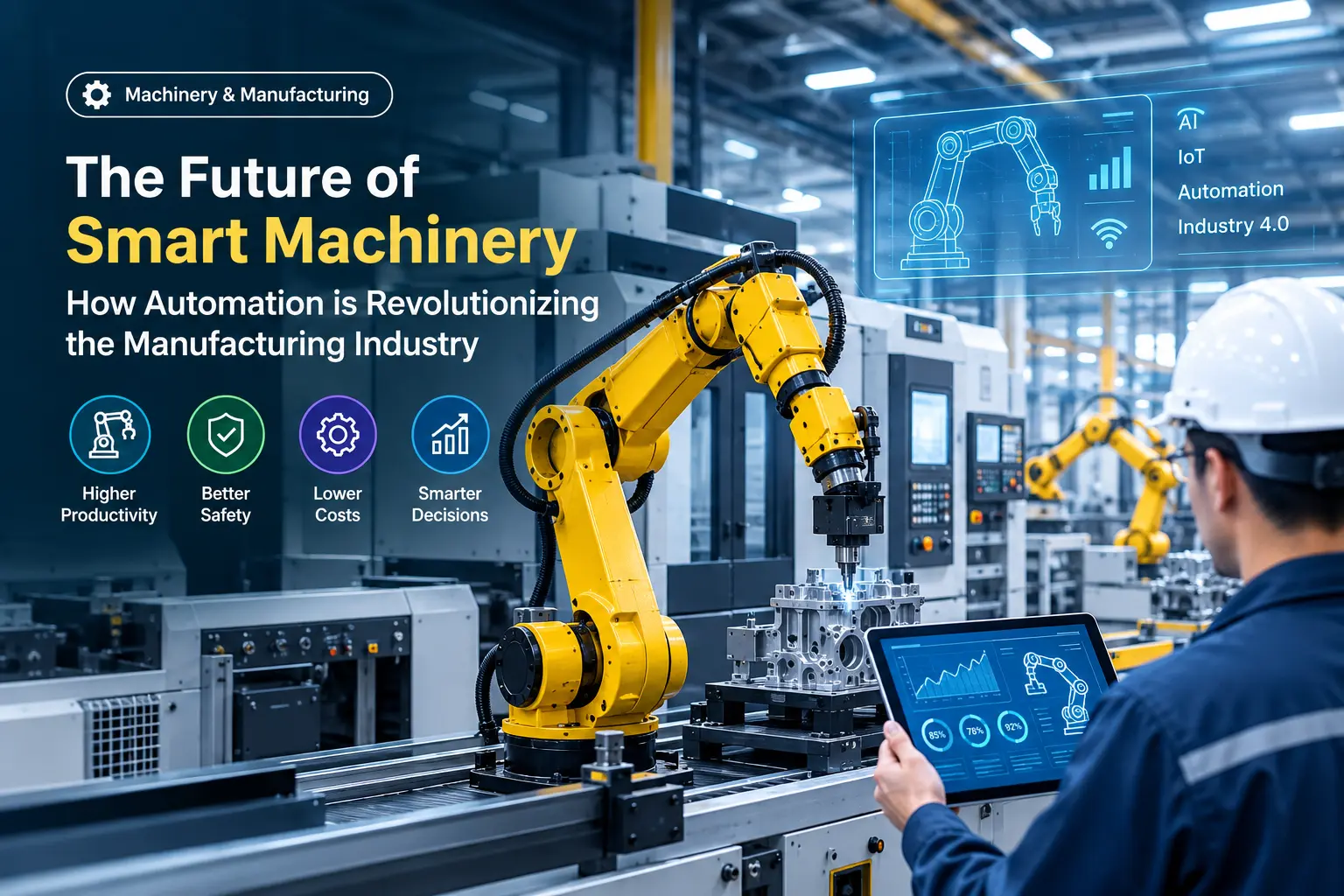
Every manufacturing leader eventually faces the same budget question: should the next capital investment go toward traditional automation, the fixed, rule based systems that have run factory floors for decades, or toward industrial AI, the newer generation of adaptive, learning based systems that promise far more flexibility. Both approaches can deliver a strong return on investment, but they get there through very different mechanisms, and choosing the wrong one for a given process can mean years of underperforming capital equipment.
Traditional automation, built around programmable logic controllers, fixed robotic arms, and rule based control logic, remains extremely cost effective for high volume, low variation production where the task never changes. Industrial AI, built around machine learning models, computer vision, and adaptive control systems, earns its keep in environments with variability, where conditions shift from one production run to the next and a fixed program simply cannot keep up. Understanding where each technology actually wins on ROI, rather than assuming the newest technology is automatically the best choice, is the difference between a smart capital investment and an expensive mistake.
Defining the Two Approaches
Traditional Automation
Traditional industrial automation refers to systems that execute a fixed, pre programmed sequence of actions. A PLC controlled assembly line, a fixed path robotic welder, or a conveyor system with simple sensor triggers are all classic examples. These systems are deterministic, meaning they perform the exact same action every time given the same input, which makes them highly reliable, easy to validate, and simple to troubleshoot when something goes wrong.
Industrial AI
Industrial AI refers to systems that use machine learning, computer vision, or other adaptive algorithms to make decisions based on real time data rather than a fixed program. An AI powered quality inspection camera that learns to recognize new defect types, a predictive maintenance model that adjusts its alerts based on changing operating conditions, or an adaptive robot that adjusts its grip based on the exact shape of the part in front of it are all examples of industrial AI in action. Unlike traditional automation, these systems improve their performance over time as they process more data.
Comparing ROI Across Six Key Factors
| Factor | Traditional Automation | Industrial AI |
|---|---|---|
| Upfront Cost | Generally lower for simple, well defined tasks | Often higher due to sensors, compute, and model development |
| Best Suited For | High volume, low variation, repetitive tasks | Variable conditions, complex decisions, changing products |
| Flexibility to Change | Low, reprogramming required for new tasks | High, models can adapt or retrain for new conditions |
| Maintenance Approach | Scheduled or reactive maintenance | Often includes predictive maintenance capability |
| Time to Value | Fast, performance is predictable from day one | Slower, models need data and a training period |
| Long Term ROI Driver | Labor cost reduction and throughput consistency | Reduced downtime, waste, and adaptability to change |
Where Traditional Automation Still Wins on ROI
It would be a mistake to assume industrial AI is always the superior investment. For processes that are highly repetitive, well understood, and unlikely to change, traditional automation continues to deliver excellent returns at a lower upfront cost and with far less implementation risk. A fixed path robotic arm performing the same weld thousands of times a day does not need to learn or adapt, it needs to execute precisely and consistently, which is exactly what deterministic automation was designed to do. In these environments, adding AI capability often introduces unnecessary cost and complexity without a corresponding performance benefit. Manufacturers with mature, stable, high volume lines should think carefully before replacing proven traditional automation purely because AI is the current trend.
Where Industrial AI Delivers Superior ROI
Industrial AI earns its higher upfront cost in environments defined by variability. Quality inspection is a clear example, since a fixed rule based vision system can only catch defect types it was explicitly programmed to detect, while an AI based computer vision system can learn to recognize new and unusual defect patterns as they appear on the line. Predictive maintenance is another strong case, since a fixed schedule cannot account for the fact that two identical machines running under slightly different conditions will wear out at different rates, something only a learning based model can account for accurately. Production scheduling in a facility that regularly changes product mix, order priority, or material availability also benefits enormously from AI driven optimization, since a fixed rule based scheduler simply cannot keep up with that level of daily variability the way an adaptive system can.
Total Cost of Ownership: Looking Beyond the Sticker Price
Comparing the two technologies purely on upfront capital cost misses much of the real financial picture. Traditional automation systems tend to have lower installation costs but can become expensive to modify when a product design changes, often requiring significant reprogramming or even new tooling. Industrial AI systems carry a higher initial investment in sensors, compute infrastructure, and model development, but that investment tends to pay off over a longer time horizon as the system continues improving and adapting without requiring a full re engineering project every time conditions change. Manufacturers should evaluate total cost of ownership across a realistic multi year horizon, including expected product changes, rather than comparing only the initial purchase price of each option.
A Practical Decision Framework
Rather than treating this as an either or decision, manufacturers get the best results by matching the right technology to the right process. A useful framework starts by asking how often the task or product is likely to change. If the answer is rarely or never, traditional automation is usually the more cost effective choice. If the answer is frequently, industrial AI is likely to deliver better long term ROI despite the higher initial investment. The next question is how much variability exists within a single production run, since high variability tasks such as bin picking irregularly shaped parts or inspecting products with natural variation are far better suited to adaptive AI systems than to fixed rule based automation. Finally, manufacturers should consider whether the value of the process comes primarily from raw speed and consistency, favoring traditional automation, or from judgment, adaptability, and continuous improvement, favoring industrial AI.
The Rise of Hybrid Systems
In practice, many of the highest performing factories in 2026 are not choosing one technology exclusively but combining both. A common hybrid pattern uses traditional fixed automation for the core repetitive motion of a task, such as a robotic arm moving a part from one station to another, while layering AI on top for the decision making component, such as a vision system determining exactly where to grip an irregularly placed part or a predictive model determining when that same robotic arm needs maintenance. This hybrid approach captures the reliability and lower cost of deterministic automation for the parts of the process that do not need to adapt, while adding AI specifically where variability or complex decision making would otherwise limit performance.
Risk Factors to Weigh Before Investing
Traditional automation carries lower implementation risk since its behavior is fully predictable and easy to validate before going live, but it carries higher obsolescence risk if the product or process it was built for changes significantly. Industrial AI carries the opposite risk profile, with more implementation uncertainty during the initial data collection and model training phase, but significantly better resilience to future changes in the process it supports. Manufacturers evaluating a new investment should weigh how confident they are that the target process will remain unchanged over the equipment's expected lifespan, since that single factor often determines which technology will actually deliver the better return.
Industry Examples: Where Each Technology Is Actually Being Deployed
Automotive manufacturing offers a clear illustration of both technologies working side by side. Traditional automation continues to dominate high volume, well defined tasks such as spot welding car frames and painting bodies, where the motion never changes from vehicle to vehicle within the same model line. At the same time, automotive plants are rapidly adopting industrial AI for final quality inspection, where computer vision models catch paint defects, panel gaps, and assembly errors that vary from unit to unit in ways a fixed rule based camera system could never fully anticipate.
Electronics assembly tells a similar story. Pick and place machines placing components onto circuit boards remain almost entirely traditional automation, since the task is precise, repetitive, and rarely changes once a board design is finalized. However, electronics manufacturers are increasingly layering AI on top for solder joint inspection and functional testing, where subtle variations in component placement or soldering quality require a level of judgment that fixed thresholds struggle to match consistently.
Food and beverage processing shows a slightly different pattern. Filling and packaging lines still rely heavily on traditional automation because the process is continuous and well understood, but sorting and grading of raw agricultural inputs, where size, color, and quality vary naturally from one item to the next, has become one of the strongest use cases for AI powered computer vision in the entire industry.
Workforce and Skill Requirements for Each Approach
The workforce implications of these two technologies differ meaningfully, and manufacturers should factor this into their ROI calculations alongside hardware and software costs. Traditional automation typically requires electricians and controls engineers who understand PLC programming, ladder logic, and mechanical troubleshooting, a skill set that has been part of manufacturing for decades and is widely available in most industrial labor markets. Industrial AI systems require an additional layer of expertise, including staff who understand how to interpret model outputs, manage sensor networks, and work with data platforms, skills that are still relatively scarce in traditional manufacturing regions. Some of this gap is being closed by vendors who design their AI platforms specifically for non specialist users, but manufacturers should still budget for training time and potentially new hires with a more data oriented skill set when planning an industrial AI rollout.
Regulatory, Safety, and Validation Considerations
Industries with strict regulatory requirements, such as pharmaceuticals, medical devices, and aerospace, often favor traditional automation for core production processes specifically because its deterministic, fully predictable behavior is easier to validate and document for regulatory audits. Industrial AI systems, particularly those using deep learning models, can behave in ways that are harder to fully explain step by step, which creates additional validation work in heavily regulated environments. That said, AI based quality inspection is still being adopted rapidly even in these industries for secondary checks, since it can be validated statistically against known good and bad samples even if the internal decision process of the model itself is less transparent than a simple rule based system. Manufacturers in regulated industries should factor in the additional validation and documentation effort required for AI systems when calculating total project cost and timeline.
A Vendor Evaluation Checklist for Either Technology
When comparing vendors for either traditional automation or industrial AI, a few practical questions help cut through marketing claims and get to the real ROI picture. For traditional automation, buyers should ask how easily the system can be reprogrammed if the product changes, what the expected mechanical maintenance schedule looks like, and how the total installed cost compares across vendors offering similar cycle times. For industrial AI, buyers should ask how much historical data is required before the system reaches reliable accuracy, how the vendor handles model retraining as conditions change over time, and how transparent the system is when explaining why it flagged a particular anomaly or defect. In both cases, requesting a reference site running a similar process at a similar scale is one of the most reliable ways to validate a vendor's ROI claims before committing capital.
Calculating ROI: A Simple Framework Manufacturers Can Use
Building a credible ROI comparison between traditional automation and industrial AI starts with mapping out every cost and benefit over a realistic multi year horizon rather than focusing narrowly on the initial quote from a vendor. On the cost side, this means including installation, integration with existing control systems, ongoing maintenance, expected reprogramming or retraining costs if the product changes, and for AI systems, the cost of sensors, compute infrastructure, and any recurring software subscription fees. On the benefit side, manufacturers should quantify labor savings, throughput improvements, scrap and rework reduction, and for AI systems specifically, the value of reduced unplanned downtime and improved adaptability to future product changes that would otherwise require a costly re engineering project under a traditional automation approach.
A common mistake is comparing the two technologies only on payback period, since traditional automation will often appear to win on this single metric due to its lower upfront cost and immediate, predictable performance. A more complete comparison extends the analysis across the full expected lifespan of the equipment, typically five to ten years for major capital automation investments, and asks how many times the process is likely to change during that window. Each time a traditional automation system requires significant reprogramming or retooling due to a product change, that cost should be added back into the total cost of ownership calculation, often revealing a very different picture than the initial payback period alone would suggest.
Manufacturers should also stress test their ROI assumptions against different future scenarios rather than relying on a single projected outcome. Modeling a scenario where product variety increases significantly over the equipment's lifespan will typically favor industrial AI, while modeling a scenario where the process remains highly stable will typically favor traditional automation. Running both scenarios side by side, rather than committing to a single forecast, gives leadership a much clearer picture of which technology carries less financial risk given genuine uncertainty about how the business will evolve.
Frequently Asked Questions
Is industrial AI always more expensive than traditional automation?
Not necessarily in every case, but industrial AI implementations typically carry higher upfront costs due to sensors, compute infrastructure, and model development, though this gap has been narrowing as AI tools become more accessible and pre built solutions reduce custom development time.
Can existing traditional automation be upgraded with AI capability?
Yes, many manufacturers add AI capability to existing PLC controlled equipment by layering on sensors and an edge computing device that feeds data to a machine learning model, without needing to replace the underlying automation system entirely.
Which technology has a faster payback period?
Traditional automation generally reaches payback faster for well defined, stable tasks since performance is predictable from day one, while industrial AI often has a longer initial payback period but can deliver a larger cumulative return over a multi year horizon in variable environments.
Does industrial AI require a large data science team to maintain?
Not as much as it used to. Many current industrial AI platforms are designed for maintenance and operations staff to manage directly through user friendly interfaces, reducing the need for a dedicated in house data science team for most standard use cases.
How do I know if my process needs AI or just better traditional automation?
A useful signal is how often the process changes and how much natural variability exists within it, since stable, low variability processes are usually served well by traditional automation while changing or highly variable processes tend to benefit more from an adaptive, AI driven approach.
Emerging Trends Shaping This Decision Through 2026 and Beyond
Several trends are gradually shifting the ROI balance further in favor of industrial AI for a wider range of applications, even as traditional automation continues to hold its ground for stable, high volume tasks. Sensor and compute hardware costs have continued to fall, lowering the upfront barrier that once made industrial AI feasible only for large enterprises with dedicated budgets. Pre trained, general purpose computer vision and anomaly detection models are also reducing the amount of custom data collection and model development required for a new deployment, shortening the time it takes to reach reliable accuracy compared to earlier generations of AI systems that had to be built almost entirely from scratch for each specific application. At the same time, software vendors are increasingly packaging industrial AI capability directly into equipment sold as traditional automation, blurring the line between the two categories and making the decision less about choosing one technology over the other and more about how much adaptive capability to include within an otherwise conventional automation purchase.
Labor market pressure is another factor pushing more manufacturers toward AI augmented automation. Persistent shortages of skilled machine operators and maintenance technicians in many regions are making the labor saving and knowledge preserving capabilities of AI systems, such as natural language troubleshooting assistants and automated root cause analysis, increasingly attractive even for processes that do not strictly require adaptive decision making. As these systems become easier to deploy and maintain, the practical threshold for choosing industrial AI over traditional automation is likely to keep shifting toward smaller and more variable production environments that would not have justified the investment even a few years earlier.
Final Thoughts
There is no single winner in the industrial AI versus traditional automation debate, because the two technologies solve different problems. Traditional automation remains the more cost effective choice for stable, repetitive, high volume tasks, while industrial AI delivers superior returns in environments defined by variability, complexity, and change. The manufacturers seeing the strongest ROI in 2026 are the ones matching each technology to the process it actually fits best, and increasingly combining both inside hybrid systems that capture the strengths of each approach.