If you are looking for a simple, safe and completely free way to enjoy movies and series on your cell phone, tablet or TV, Tubi – Free Movies and Series stands out as one of the best options available in 2026. With an impressive collection, a clean interface, and support for Portuguese subtitles, the app offers access to thousands of titles free of charge. And best of all, it's available for direct download from the official stores:

Tubi: Free Movies & Live TV
Cobot Automation Guide: Costs, Applications and ROI for Small Manufacturers
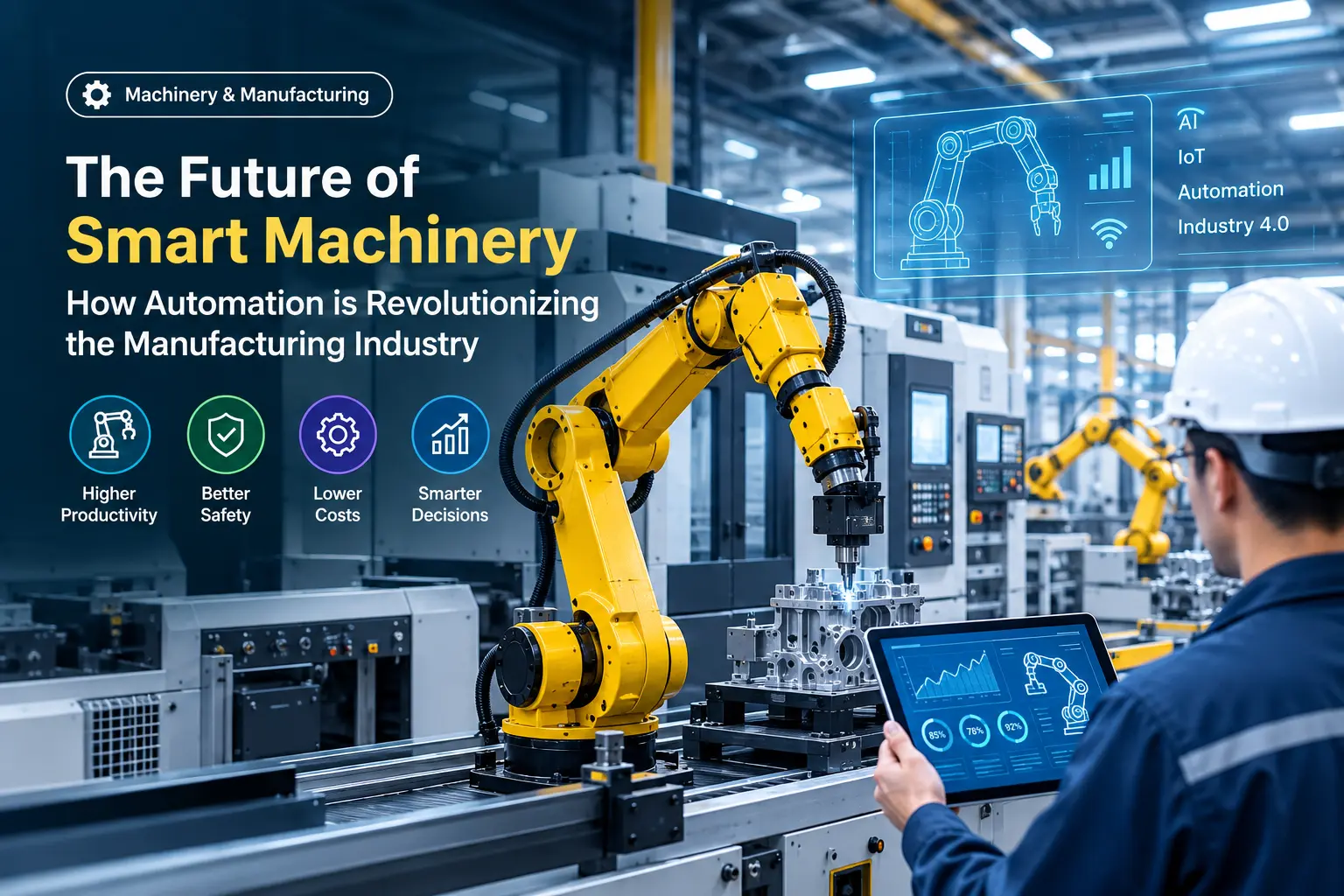
Collaborative robots have become the most accessible entry point into automation for small manufacturers, but a surprising number of first time buyers still underestimate what a complete cobot deployment actually involves, both in terms of true total cost and the specific steps required to get from an initial purchase decision to a reliably running production application. Understanding the full cost picture, the realistic range of applications where cobots genuinely excel, and how to calculate ROI properly before committing budget is what separates a successful first cobot deployment from a disappointing one.
This guide serves as a complete, practical reference for small manufacturers evaluating cobot automation, covering every component of true total cost, a comprehensive catalog of proven applications with the specific characteristics that make each one a good fit, a step by step methodology for calculating realistic ROI, and the implementation process from initial planning through a running production deployment.
The Complete Cost of a Cobot Deployment
The price of the robotic arm itself is only one piece of what a manufacturer actually needs to budget for, and underestimating the other components is one of the most common planning mistakes first time buyers make.
The Robotic Arm Itself
This is the cost most buyers focus on first, and it varies based on the arm's payload capacity, reach, and precision specifications, with higher payload and longer reach models generally commanding a higher price than smaller, lighter duty arms suited to simple pick and place tasks.
End Effector and Tooling
The gripper, suction cup, welding torch, or other tool attached to the end of the robot arm is a separate cost that varies enormously depending on the specific task, and is often underestimated by first time buyers who assume the base robot price includes whatever tooling their application requires. Some applications may even need multiple interchangeable end effectors if the robot will be used for several different tasks.
Safety Risk Assessment
Even though many cobots are designed to operate without traditional safety fencing, a formal risk assessment is still required to confirm that a specific application, considering the exact payload, speed, and end effector involved, is genuinely safe for fence free operation. This assessment may be conducted internally by trained staff or through an outside safety consultant, and its cost should be built into the overall project budget rather than treated as an afterthought.
Integration and Programming
Connecting the cobot to existing equipment, such as a CNC machine it will be tending, and programming its initial task sequence represents a meaningful cost component, though this is often considerably lower for cobots than for traditional industrial robots given their simpler programming interfaces and reduced need for extensive fixed infrastructure.
Training for Staff
Training existing production and maintenance staff to operate, reprogram, and perform basic troubleshooting on the cobot is an often overlooked cost that directly affects how smoothly the deployment is adopted and how quickly the organization can redeploy the robot for future tasks without ongoing dependence on outside integration support.
Ongoing Maintenance and Support
Beyond the initial deployment, manufacturers should budget for periodic maintenance, potential software subscription or support fees depending on the vendor's pricing model, and eventual replacement of wear components such as grippers that experience repeated mechanical stress over time.
A Comprehensive Catalog of Proven Cobot Applications
| Application | What It Involves | Why Cobots Fit Well |
|---|---|---|
| Machine Tending | Loading and unloading parts from CNC or molding equipment | Repetitive task, frees staff for higher value work |
| Pick and Place | Moving parts between fixed locations | Simple to program, fast to deploy |
| Packaging | Placing finished products into boxes or containers | Consistent, repetitive motion well suited to automation |
| Quality Inspection Positioning | Holding or presenting parts for a vision inspection system | Improves inspection consistency and camera positioning |
| Dispensing and Gluing | Applying adhesive, sealant, or coating along a path | Improves consistency compared to manual application |
| Screw Driving and Fastening | Installing fasteners at defined points on an assembly | Reduces repetitive strain injury risk for staff |
| Polishing and Finishing | Sanding, buffing, or deburring parts | Consistent pressure and motion improve finish quality |
| Palletizing | Stacking finished products onto pallets | Reduces physically demanding repetitive lifting |
| Welding | Small batch or varied welding tasks | Lower cost entry point than traditional welding cells |
| Kitting | Assembling sets of components for downstream assembly | Handles repetitive sorting and grouping reliably |
A Step by Step ROI Calculation Methodology
Manufacturers should walk through a structured calculation rather than relying on generic industry payback figures that may not reflect their own specific situation. The process begins by documenting the fully loaded current cost of performing the target task manually, including wages, benefits, and any overtime or temporary staffing costs currently associated with that specific task. Next, manufacturers should estimate the total upfront cost of the cobot deployment using the complete cost breakdown described earlier in this guide, including the arm, end effector, safety assessment, integration, and training, rather than just the robot's base price. From there, manufacturers should estimate any additional value beyond direct labor savings, such as expected reduction in quality defects, decreased injury risk for physically demanding tasks, or increased production capacity from running the task during hours when human staff are not available. Dividing the total upfront cost by the combined annual value of labor savings and these additional benefits produces a realistic payback period specific to the manufacturer's own situation, which should then be compared honestly against the manufacturer's own capital investment expectations rather than an industry average that may not reflect their particular circumstances.
Industry Examples Illustrating Real Cobot ROI
A small plastics injection molding shop deploying a cobot for machine tending might see its strongest ROI driver come from enabling unattended overnight production on well characterized, high confidence jobs, effectively adding production hours without adding labor cost during those hours. A small contract electronics assembler using a cobot for screw driving and fastening might see its primary value in improved consistency and reduced repetitive strain injury risk for staff previously performing that exact motion many hundreds of times per shift, alongside the direct labor reallocation benefit. A small metal finishing shop deploying a cobot for polishing might find that consistent, automated finish quality reduces costly rework and customer returns, an ROI driver that is easy to overlook if a manufacturer focuses solely on direct labor cost savings during the initial evaluation.
The Safety Risk Assessment Process in Detail
Understanding what a cobot safety risk assessment actually involves helps manufacturers budget appropriately and avoid an unpleasant surprise midway through a project. The assessment typically begins by evaluating the specific combination of the robot's payload, operating speed, and end effector design, since even a robot marketed generally as collaborative may require speed limitations or additional protective measures for a specific application involving a heavier payload or a sharp or hazardous end effector. The assessment also considers the specific workspace layout, including how closely human workers will actually operate near the robot during normal operation and what unexpected human movements or interactions might reasonably be anticipated. Based on this assessment, the deployment may proceed entirely without additional fencing, may require certain speed or force limitations to be configured in the robot's control software, or in some cases may still require partial physical barriers for the specific higher risk aspects of the application, even though the overall deployment remains far less extensive than the fencing a traditional industrial robot would require for the same task.
Implementation Timeline: From Decision to Running Production
A well planned first cobot deployment typically follows a predictable sequence of phases. The initial planning phase involves clearly defining the target task, gathering baseline cost and performance data on the current manual process, and researching cobot options genuinely suited to that specific application. A vendor evaluation and selection phase follows, ideally including a trial or demonstration using the manufacturer's own actual parts rather than relying solely on a vendor's generic demonstration hardware. Once a cobot is selected, the safety risk assessment and integration planning phase addresses exactly how the robot will be safely deployed and connected to any existing equipment it needs to interact with. Installation and initial programming follows, typically including a period of monitored operation where staff observe the robot's performance closely before fully trusting it to run unattended. Finally, a stabilization phase allows the organization to work through any early issues, complete staff training, and confirm the deployment is meeting its expected performance before considering whether and how to expand cobot use to additional tasks.
Comparing Cobot Financing Options for Small Manufacturers
Small manufacturers have several practical options for financing a cobot purchase beyond a single upfront capital outlay, and choosing the right one can meaningfully affect how quickly a deployment becomes financially attractive. Outright purchase offers the lowest total cost over the equipment's full service life and gives the manufacturer complete ownership and flexibility, making it a sound choice for manufacturers confident in the specific application and comfortable committing capital upfront. Equipment leasing spreads the cost into predictable monthly payments, preserving working capital for other business priorities while still eventually building toward ownership, and is often attractive to manufacturers who want to test cobot automation without a large single expenditure. Robotics as a service arrangements bundle the robot, software, and often ongoing support into a single subscription, sometimes tied to actual usage, shifting more of the maintenance and technology risk onto the vendor in exchange for a somewhat higher long term cost compared to outright purchase, a tradeoff that can make sense for manufacturers particularly concerned about the risk of an unfamiliar new technology underperforming expectations.
Choosing the Right First Vendor and Integrator
For small manufacturers without prior robotics experience, the quality of vendor and integrator support during a first deployment often matters as much as the specific technical capabilities of the cobot itself. Manufacturers should ask prospective vendors directly about their experience supporting businesses of a similar size and industry, since a vendor primarily focused on large enterprise accounts may not provide the same level of accessible, hands on support a smaller manufacturer typically needs during an initial deployment. Requesting references from similarly sized manufacturers, ideally in a comparable industry, and asking those references specifically about the vendor's responsiveness during installation and any early troubleshooting, provides considerably more useful insight than reviewing a vendor's general marketing materials or largest enterprise case studies. Local or regional integrators with direct experience serving smaller manufacturers can also be a valuable resource, often providing more accessible ongoing support than a distant vendor whose support model is built primarily around larger, more geographically dispersed enterprise accounts.
Common Mistakes to Avoid
A number of avoidable mistakes tend to undermine first time cobot deployments for small manufacturers. Underestimating the true total cost by focusing only on the robot arm's price while overlooking end effector, safety assessment, and integration costs is one of the most common, often leading to budget overruns partway through a project. Choosing an application with inconsistent part presentation or excessive task variability, rather than a well defined, relatively consistent task suited to a first deployment, frequently causes reliability problems that have more to do with inadequate task selection than any actual limitation of the cobot itself. Skipping or rushing the safety risk assessment, assuming that any robot marketed as collaborative can automatically operate safely without fencing regardless of the specific application, creates both safety risk and potential liability exposure that a proper assessment process is specifically designed to identify and address.
Planning for Future Redeployment and Scaling
One of a cobot's most valuable long term characteristics is its ability to be redeployed to new tasks as production needs evolve, but capturing this value requires some forward planning during the initial deployment rather than treating the first application as a permanent, fixed installation. Manufacturers should consider standardizing on quick change mounting systems for end effectors and fixtures where practical, since this makes switching a cobot between different tasks considerably faster and less disruptive than if each application requires extensive manual reconfiguration. Documenting the programming, fixturing, and safety assessment details for each application the cobot performs also builds an internal knowledge base that makes future redeployment faster, since staff can reference how a similar past application was configured rather than starting entirely from scratch each time production needs shift. Manufacturers who treat their first cobot as the beginning of an ongoing, flexible automation capability, rather than a single purpose purchase dedicated permanently to one task, generally extract considerably more cumulative value from the investment over its full service life.
Frequently Asked Questions
What is the single biggest cost most first time cobot buyers underestimate?
End effector and tooling costs are frequently underestimated, since many buyers assume the base robot price includes whatever gripper or tool their specific application requires, when in reality this is almost always a separate cost that can represent a meaningful portion of the total project budget depending on the complexity of the task.
How long does a typical cobot deployment take from decision to running production?
Straightforward applications with well defined, consistent tasks can often move from initial decision to running production within a few weeks to a couple of months, while more complex applications involving significant custom tooling or integration with existing equipment may take longer to reach full, stable production operation.
Does every cobot application require a full formal risk assessment?
Yes, a risk assessment appropriate to the specific application should be conducted for any cobot deployment, since the actual safety requirements depend on the robot's payload, speed, end effector, and workspace layout, meaning even applications using a robot marketed as collaborative still need this evaluation before being deployed without fencing.
Which cobot application typically offers the fastest and most reliable ROI for a first deployment?
Machine tending is generally considered one of the most reliable first applications, since it involves a well defined, repetitive task with a clear, easily measured labor savings benefit and typically presents fewer part variation challenges than more complex applications such as polishing or dispensing.
Can a single cobot be used for more than one application over time?
Yes, one of the core advantages of cobots over traditional industrial robots is that a single unit can often be reconfigured or physically moved to perform a different task as production needs change, provided the appropriate end effector and programming changes are made and any new application specific safety assessment is completed.
What is the typical service life of a cobot before it needs replacement?
Cobots are generally built for a multi year service life comparable to other industrial equipment, though the specific components most likely to need replacement over time, such as grippers and other end effector wear parts, should be factored into ongoing maintenance planning separately from the core robotic arm itself, which typically remains reliable for a considerably longer period with appropriate care.
Should a small manufacturer buy a used or refurbished cobot to reduce upfront cost?
A used or refurbished cobot can reduce upfront cost, but manufacturers should weigh this against the reduced or absent vendor warranty coverage and potentially outdated software or safety features compared to a current model, particularly for a first automation project where reliable vendor support during the learning process carries significant value beyond the equipment cost alone.
Final Thoughts
Cobot automation offers small manufacturers a genuinely accessible path into robotics, but a successful first deployment depends on understanding the true full cost beyond just the robot arm itself, choosing an application genuinely well suited to a cobot's strengths, and calculating ROI based on a manufacturer's own real numbers rather than generic industry claims. Manufacturers who approach their first cobot project methodically, budgeting honestly for every cost component and following a structured implementation process from planning through stabilization, consistently achieve better results than those who underestimate the full scope of what a successful deployment actually requires.